A Queensland Supreme Court decision is another reminder that workplace injuries do not need to leave a worker completely incapacitated for employers to face substantial compensation exposure.
In Singleton v Direct Personnel Services Pty Ltd [2025] QSC 259, a worker was awarded approximately $920,000 in compensation after suffering a back injury while performing manual handling work at a factory.
The case is highly relevant for:
- HR professionals;
- labour hire companies;
- host employers;
- safety leaders;
- operational managers; and
- businesses relying on contractors or labour hire arrangements.
One of the biggest takeaways from this decision is simple:
Labour hire arrangements do not remove workplace safety obligations.
The Workplace Incident
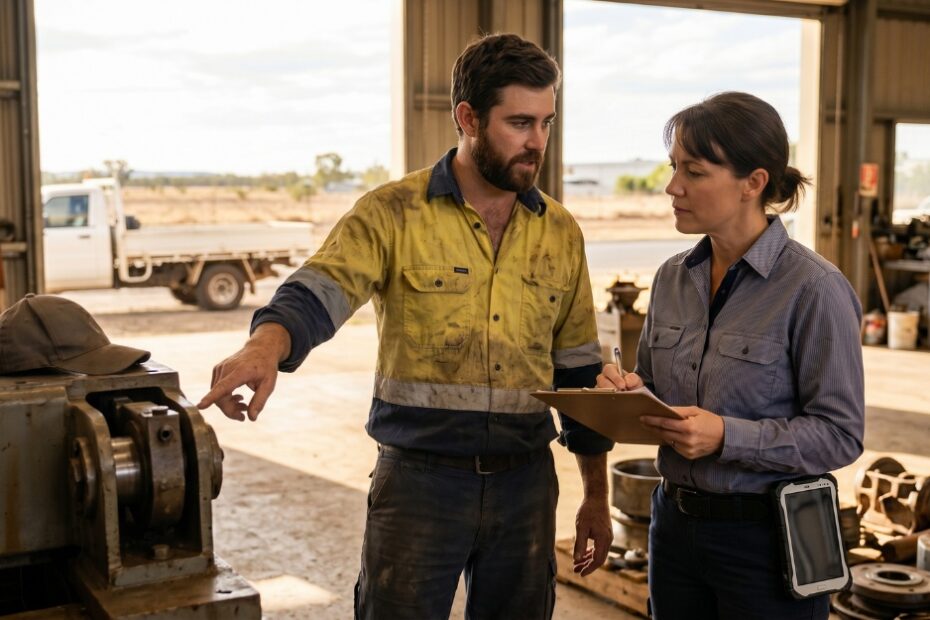
The worker was employed by a labour hire company and placed at a factory operated by a host employer.
During the course of work, the employee and a coworker were moving a heavy piece of equipment when it came off its rails and fell forward.
The movement caused the worker to jolt forward suddenly.
He immediately experienced back pain.
Medical investigations later confirmed a disc protrusion in his spine requiring surgery.
Although surgery was performed, the worker could not return to his previous role, with medical evidence indicating he was only capable of light-to-medium duties into the future.
The Critical Finding Against The Employers
The Queensland Supreme Court found both:
- the labour hire employer; and
- the host employer
were liable for the injury.
Importantly, the Court found the risk was obvious.
The equipment coming off the rails was not some unforeseeable freak accident.
The Court determined there was no adequate safe system of work to manage the risk.
According to the findings, there were relatively straightforward control measures available, including:
- fixture devices to stabilise the equipment;
- better training;
- ongoing supervision; and
- safer systems surrounding the use of the equipment.
The Labour Hire Risk Many Businesses Underestimate
One of the more significant aspects of this decision is the Court’s criticism of the labour hire employer’s oversight of the host workplace.
The Court found the labour hire employer should have undertaken continuing inspections of the host employer’s workplace to ensure:
- adequate training was occurring;
- safe systems existed; and
- the equipment and environment were safe.
This is a major issue for labour hire providers and host employers across Australia.
Too often businesses assume:
- the host employer controls safety; or
- the labour hire company bears responsibility.
The reality is that both parties can face liability exposure.
And increasingly, Courts are expecting active oversight rather than passive assumptions.
The Most Interesting Part Of The Decision
What makes this case particularly interesting is the evidence surrounding the worker’s activities after the injury.
There was evidence the worker:
- travelled on 11 overseas holidays; and
- attended the gym 5 to 6 times per week.
Some employers may assume this type of evidence would significantly undermine a compensation claim.
But the Court still accepted the worker suffered ongoing impairment affecting his employment capacity and future earning potential.
This is an important reminder for employers managing workplace injury claims.
A worker does not need to be:
- bedridden;
- completely immobile; or
- incapable of recreational activity
to establish significant economic loss and ongoing impairment.
The legal assessment focuses heavily on:
- work capacity;
- future employability;
- pain symptoms;
- medical restrictions; and
- earning impairment.
Why This Case Matters For HR And Safety Teams
This case highlights several growing workplace law and safety trends:
- increased scrutiny on labour hire arrangements;
- stronger expectations around active safety oversight;
- manual handling risk management;
- supervision failures; and
- documented systems versus actual implementation.
It also reinforces that Courts are continuing to closely examine whether employers have:
- identified foreseeable risks;
- implemented practical control measures; and
- actively monitored compliance onsite.
Questions Every Employer Should Be Asking
This decision creates a useful checklist for employers and HR leaders:
Workplace Hazard Management
- Have we recently reviewed hazards in the workplace?
- Are our SWMS and risk assessments current?
- Are identified controls actually being used onsite?
Supervision And Training
- Are workers receiving practical training?
- Is refresher training required?
- Are supervisors actively enforcing safety procedures?
Labour Hire And Contractor Oversight
- Are host workplaces being audited or inspected?
- Who is responsible for ongoing safety monitoring?
- Are labour hire arrangements creating gaps in accountability?
Psychosocial And Broader WHS Obligations
- Are psychosocial hazards being addressed?
- Do managers understand WHS obligations beyond physical safety?
- Does the business require updated bullying, harassment or sexual harassment prevention systems and/or training?
Our team regularly works with Employers, Safety and HR teams and leadership groups on practical safety training across Australia.
👉 Read more about our training services at South Geldard Lawyers https://southgeldard.com.au/management-training/
If this adds value, share with a colleague or fellow decision maker.